

Useful information for traveling to Algeria
A Complete Guide to Your Trip to Algeria: Safety, Visas, and Practical Advice.
Melissa and Alessandro guide you through every detail of your preparation—from bureaucracy to on-the-ground safety—transforming uncertainty into an authentic discovery.
Melissa and Alessandro guide you through every detail of your preparation—from bureaucracy to on-the-ground safety—transforming uncertainty into an authentic discovery.
Documents and Visas
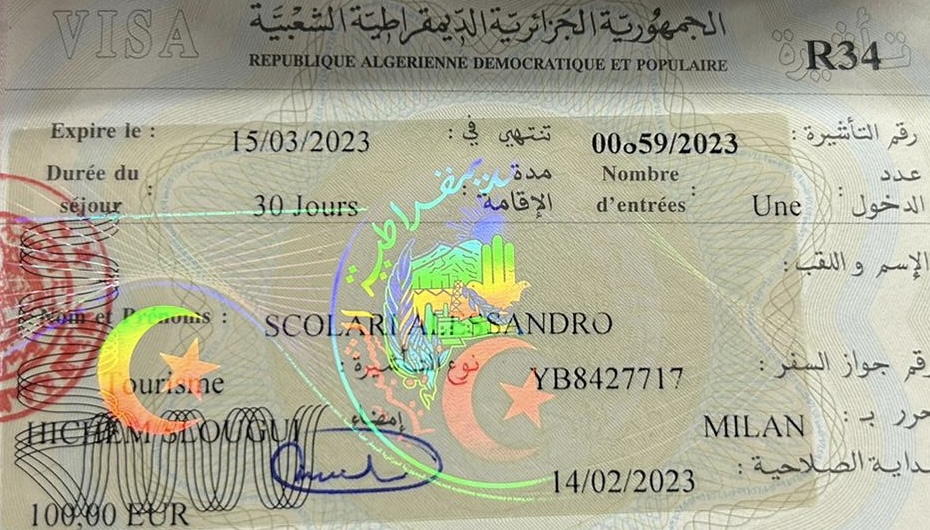
To travel to Algeria, you must hold a valid passport along with an entry visa. Please note that entry into Algeria is not permitted if your passport contains a stamp issued by Israeli authorities upon arrival.
• Passaport: Must have at least 6 months of remaining validity and two blank pages for the stamp.
• Mandatory Visa: Italian citizens must obtain a visa before departure. This should be requested at the Algerian Consulate by submitting a completed application form, photos, and flight and hotel reservations
• NEWS: A “visa on arrival” facilitation has been introduced—forget the long waits at the consulate. The Algerian desert is closer than ever thanks to these new simplified entry procedures.
We can assist you with the completion of all necessary documents.
• Mandatory Visa: Italian citizens must obtain a visa before departure. This should be requested at the Algerian Consulate by submitting a completed application form, photos, and flight and hotel reservations
• NEWS: A “visa on arrival” facilitation has been introduced—forget the long waits at the consulate. The Algerian desert is closer than ever thanks to these new simplified entry procedures.
We can assist you with the completion of all necessary documents.
Health and Vaccinations
What you need to know before you leave
Mandatory Vaccinations: None for those arriving from Italy. A Yellow Fever vaccination certificate is only required if traveling from or transiting through countries where the disease is endemic.
Recommended Vaccinations: Hepatitis A and B, Typhoid, and Tetanus. We recommend consulting your doctor before departure.
Medications: Bring your personal medications along with their prescriptions. Local pharmacies are well-stocked, but they may not always carry the same active ingredients you are used to.
Recommended Vaccinations: Hepatitis A and B, Typhoid, and Tetanus. We recommend consulting your doctor before departure.
Medications: Bring your personal medications along with their prescriptions. Local pharmacies are well-stocked, but they may not always carry the same active ingredients you are used to.
Currency and Payments
Local Currency: Algerian Dinar (DZD).
Currency Exchange: It is not possible to exchange Dinars in Italy.
Currency exchange must be done in Algeria, preferably at banks or hotels.
Credit Cards: Not widely accepted. It is highly recommended to carry cash.
Currency Exchange: It is not possible to exchange Dinars in Italy.
Currency exchange must be done in Algeria, preferably at banks or hotels.
Credit Cards: Not widely accepted. It is highly recommended to carry cash.
Time Zone
Same time as Italy; -1h when Daylight Saving Time is in effect in Italy.
Electricity
The electrical voltage in Algeria is 220V. To use your electronic devices and chargers, you will need Type C and Type F power adapters.
Communication
International Dialing Code: +213
Local SIM Cards: Recommended for calls and internet. Main providers: Djezzy, Mobilis, and Ooredoo.
Wi-Fi: Available in hotels and cafes, but not always stable.
Local SIM Cards: Recommended for calls and internet. Main providers: Djezzy, Mobilis, and Ooredoo.
Wi-Fi: Available in hotels and cafes, but not always stable.
Safety
Behavior: Avoid public demonstrations, respect local authorities, and do not take photographs of government buildings.
Culture and Clothing
Religion: Sunni Islam. Respecting local traditions is essential.
Clothing: Modest, especially for women. Avoid clothing that is too short or revealing.
During Ramadan: Restaurants are closed during the day, and the pace of life slows down. It is important to inform clients if they are traveling during this period.
Clothing: Modest, especially for women. Avoid clothing that is too short or revealing.
During Ramadan: Restaurants are closed during the day, and the pace of life slows down. It is important to inform clients if they are traveling during this period.
Cuisine and Food
Food: Spicy but flavorful. Typical dishes include couscous, tajine, and chorba.
Water: It is best to consume only bottled water.
Alcohol: Available only in certain restaurants and hotels. It is strictly prohibited in public places.
Water: It is best to consume only bottled water.
Alcohol: Available only in certain restaurants and hotels. It is strictly prohibited in public places.
What to Pack
Power adapter: (Type C and F plugs, same as in Italy).
Sun protection: Sunscreen, lip balm, and sunglasses.
Clothing: Lightweight but modest/full-coverage clothing.
Footwear: Comfortable shoes for excursions and hiking.
Documents: Copies of your travel documents and emergency contact numbers.
Sun protection: Sunscreen, lip balm, and sunglasses.
Clothing: Lightweight but modest/full-coverage clothing.
Footwear: Comfortable shoes for excursions and hiking.
Documents: Copies of your travel documents and emergency contact numbers.
Getting There and When to Go
Direct Flights: From Rome and Milan to Algiers, Oran, and Constantine. Average duration: 2h 30m.
Internal Transport: Taxis, buses, and trains. Taxis do not have meters: always agree on the price before starting the journey.
Best Season: From mid-September to late April/early May for the northern regions.
Internal Transport: Taxis, buses, and trains. Taxis do not have meters: always agree on the price before starting the journey.
Best Season: From mid-September to late April/early May for the northern regions.
What is required to obtain a visa?
Completed application form, passport photo, flight booking, and reservation for the first night at the hotel.
Can I bring my medications from Italy?
Yes, it is recommended to bring your personal medications along with their prescriptions. While pharmacies are common in Algeria, they may not always carry the same active ingredients.
Is it worth buying a local SIM card?
Yes, it is the best solution for calls and internet. The main providers are Djezzy, Mobilis, and Ooredoo.
Can I take photos freely?
It is best to avoid government and military buildings. When it comes to people, it is always good practice to ask for permission first.
What is the dress code?
Dress modestly, especially for women. It is better to avoid clothing that is too short or revealing.
How do you get around in Algeria?
There are buses, trains, and taxis. Please note: taxis do not have meters, so it is wise to agree on the price before getting in.